Beyond the Desktop: Why a “Mobile-First” Strategy is Essential for Growth in Africa
 October 28, 2025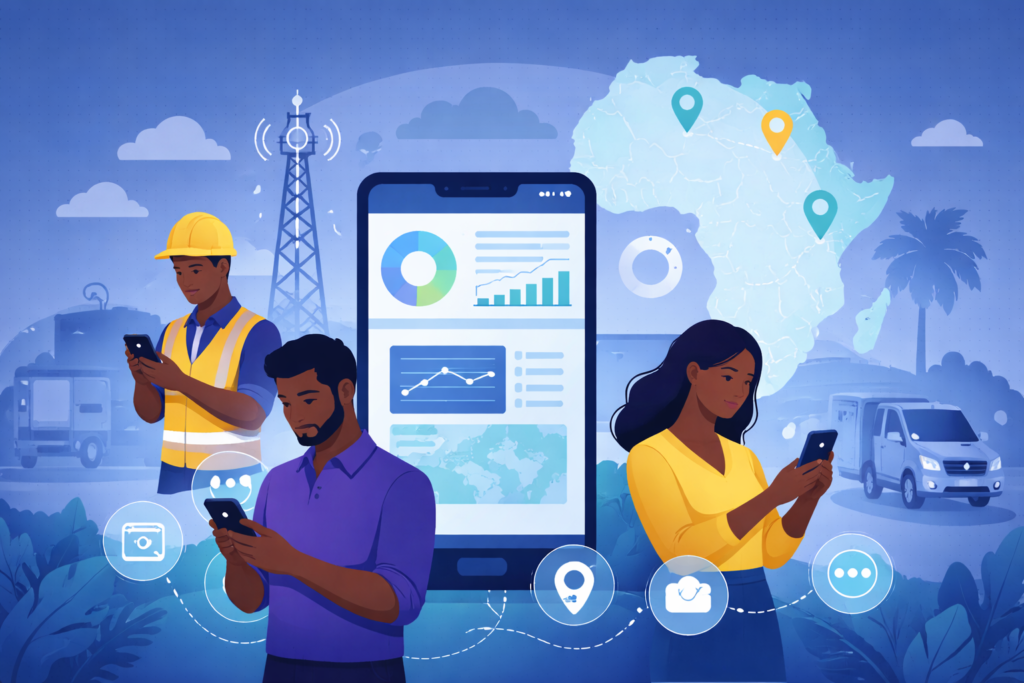
For years, businesses have thought about mobile as a secondary channel, a smaller screen where a simplified version of their desktop experience could live. This “desktop-first” thinking is a relic of the past. In Africa, where mobile penetration far exceeds that of traditional broadband and laptops, the most successful and innovative organizations are those that have embraced a “mobile-first” strategy.
A mobile-first strategy is more than just having a responsive website. It is a fundamental shift in mindset. It means designing your processes, services, and employee tools with the mobile device as the primary point of interaction. For businesses across the continent, this approach is no longer an option; it is the essential key to unlocking productivity, reaching more customers, and building a future-ready organization.
- Empowering Your Distributed Workforce
The nature of work in many of Africa’s key industries, from agriculture and logistics to construction and public services, is inherently mobile. Your most critical operations do not happen behind a desk. They happen on a factory floor, at a remote construction site, or in a community being served.
Expecting your field workforce to rely on paper forms or to wait until they return to an office to update their systems is a massive drain on efficiency. A mobile-first strategy equips these teams with powerful, purpose-built applications on their smartphones or tablets. This allows them to capture data, complete tasks, and access critical information in real time, directly from the field.
- The Critical Importance of Offline Capability
A true mobile-first strategy for Africa must address the reality of intermittent connectivity. Many remote and rural areas still lack reliable internet access. A solution that stops working the moment the signal drops is not a real solution.
This is why offline capability is non-negotiable. A well-designed mobile application must allow a user to perform their entire job without a connection. They can complete their forms, take photos, and queue up their reports, with all the data saved securely on the device. The application should then sync automatically and seamlessly with the central system the moment connectivity is restored.
“A mobile strategy that fails without an internet connection is not a mobile strategy; it is a city-center strategy.”
- Reaching a Mobile-Native Customer Base
For a growing majority of African consumers, the smartphone is not just a device; it is the device. It is their primary, and often only, gateway to the internet and to the digital economy. If your services are not easy to access and use on a mobile phone, you are effectively invisible to a huge segment of your potential market.
A mobile-first approach means designing your customer-facing services, from e-commerce to government e-services, with the mobile user in mind. This leads to higher adoption rates, greater customer satisfaction, and a more inclusive service delivery model.
- Unlocking New Data and Insights
Mobile devices are also powerful data collection tools. They are equipped with cameras, GPS, and a host of other sensors. By empowering your field teams with mobile applications, you can capture a new level of rich, contextual data that was previously impossible to obtain.
An inspector can capture geo-tagged photographic evidence of a compliance issue. A logistics driver can confirm a delivery with a time-stamped signature. This high-quality, real-time data from the field provides managers with a much deeper and more accurate understanding of their operations.
The Future is in Your Hand
In Africa, the mobile phone is the most powerful tool for business and social transformation. By embracing a mobile-first strategy, organizations can not only improve their own internal efficiency but can also create more accessible services, reach new customers, and build a more connected and productive future.